When I first visited the
picturesque County of Warwickshire in 2006 I was visiting the birthplace of
Shakespeare. With a day to spare we had to choose between spending the day
driving around the hills and dales to Warwickshire Castle or visiting the Jaguar
factory at Coventry. That was in the days before I knew about our family
history connection and little did I know I was only 28 miles south from Nuneaton, the
place where generations had lived for hundreds of years.
Basically the Gadsby family are descended from
people who lived in and around Northern Warwickshire in the West Midlands of
the UK for at least 12 generations before moving 8 miles away to Coventry and
then further to London and Australia. But that was in the days before I was
"doing the family history" My main emphasis that day in England and
was to avoid a visit to the Jaguar factory. You can guess who wanted to do
that. I’m sorely regretting that decision now.
Our focus begins on the Nuneaton
area. Draw a small circle around the parish area of Nuneaton to
highlight places like Exhall, Foleshill, Stockingford, Chivers Coton and
Attleborough. Our ancestors in the Gadsby and the maternal sides lived in and
around these villages from the 1550s to 1851 -- 300 years in this little part
of Warwickshire. The Gadsby family in particular had local family connections
in the Nuneaton district from the 18th
to the 20th century.
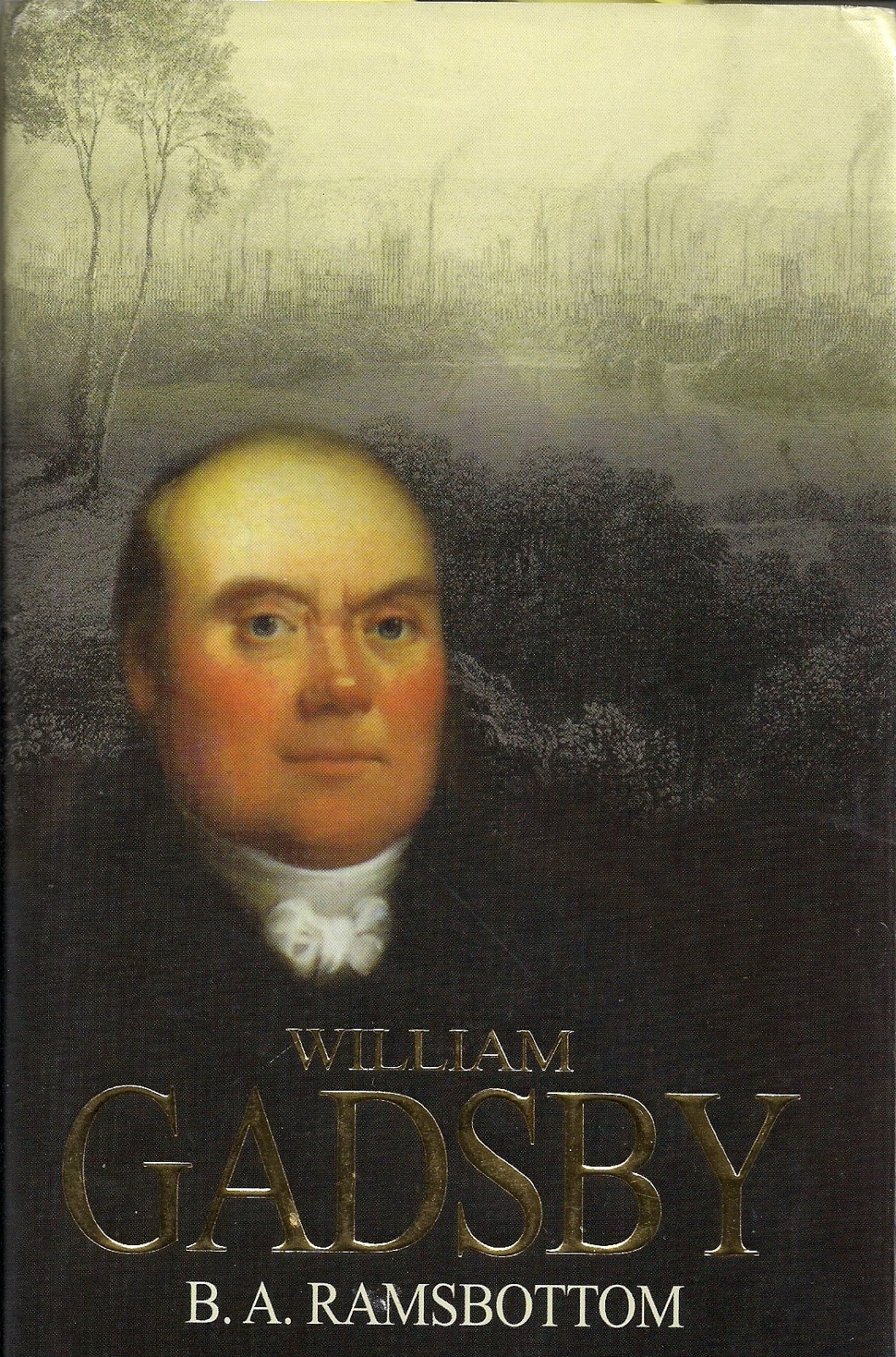
One local historian, Peter Lee has
described the Gadsby clan as “local gentry amongst the labouring people worthy
of a bit extra (research) attention.” There is even a Gadsby Street in Nuneaton
named in honour of a famous member of the family -- the preacher William
Gadsby.
Although there was a French and German
Belgium influence in the area we seem to have been devoid of continental
influences in our names. We can track our family through the Gadsbys for seven
generations to approximately 1680. Typical Christian names are John, William,
Thomas, Henry and George for the boys and Catherine for the girls. Through the
maternal lines of Popes, Lesters and Proctors we can trace from the current
generation 15 generations back to 1550, most of which have been lived in the
northern Warwickshire area.
Our Tudor relatives living in the Nuneaton surrounds
probably worked in industries such as leather tanning, brick making and iron
working. In the 18th century the town of Nuneaton become famous for silk ribbon
weaving. Silk ribbons would adorn the ladies clothing and hats of the day and
members of our family worked in that industry since at least the 1780s. By the
end of the 1700s Nuneaton had a population of 2000 and was a good sized market
town in its time.




Records show the children Catherine, John, Henry
and Thomas were baptised on the same day at the ruined St Michaels of Coventry
in 1863 where John is working as a
Police Constable.


In 1770 John Gadsby at aged 50
married for the second time to a young 20 year old named Martha Lingard. He had
already had 7 children by Elizabeth Cope who he had married in 1756. He then proceeded to father 7 more with Martha. His
father – also a John had been a shag (carpet) weaver in Coventry but little is
known about him and how his son John came to live in Abbey Street, Nuneaton. Note
that Attleborough is a hamlet of Nuneaton. However we do know he was a poor
roadman who ended up living until 96 years old. His job would have entailed
building and maintaining about a mile stretch of road between Attleborough and Coventry.
Two of his children by Martha were John and the famous preacher, William. We
are descended from John(3) .
While baptism, marriage and burial
records from the Nuneaton area give us details of births, deaths and marriages
amongst our relatives it is the accounts of the Gadsbys’ life recorded in
published writings by John Gadsby, son
of William Gadsby, the famous Preacher, which give us the first inkling of what
it was like to grow up in Nuneaton. This work was also used as a source for the
Biography on William Gadsby by B.A.Ramsbottom in 2003.

A
sketch of Gadsby’s house in Attleborough, Nuneaton
John was described as a very quiet
man as opposed to his wife Martha who was just the opposite. His first child
from the second marriage was our John . He and his younger brother William had
to nurse the younger children being the eldest of the 7 children from this
second marriage. It is said “ the Gadsby children were left to run about the
village, barefoot and ragged and almost
wild until they were old enough to work.” (B.A.Ramsbottom 2003). They were also
described in Ramsbottom’s biography as
“full of mischief and up to all manner of pranks.” It is likely that John and William learnt
reading but not writing or English at the Nuneaton church school.
He is also responsible for his brother,
William seeking religion. Apparently while out one night John persuaded his
brother to go into the Three Crowns at Attleborough and have a taste of the
“Queens Cordial”. Three halfpence worth each was enough to do the trick. The
Landlady sent them on their way saying “I’ll have no drunken fellows here.”
William swore off alcohol from then on and sought the Lord’s forgiveness!
John went on to be married three times to
Elizabeth Smith, Mary Brown and Elizabeth Harris. Mary Brown had only one
daughter Damaris, while John and Elizabeth Harris had 5 children one of whom is
our John (4) –Thomas Gadsby’s father.

Nuneaton
township
It
is the 1841 Census that gives us an inkling of exactly where our John (4)
lived, how they earned their living and
perhaps even the hardships faced in his life. At the time of the census this
John born 1826 was living with his half sister Damaris Asbury with her family
in Hall Row Attleborough, Nuneaton. At
age 15 he is working as ribbon weaver in the Damaris’ family home. His thrice
married father had died eight years earlier in 1833 and presumably his mother
Elizabeth nee Harris was also dead. John and Damaris were most probably the
only living children from the three marriages. He lived just round the corner
from where his future in-laws the Pope's lived in Freers Row. Charlotte Pope
was also from a ribbon weaving family.

Jno
Gadsby and Damaris Asbury on the 1841 Nuneaton census
Nuneaton streets at that time were
filled with the clackitty clack of looms as most of the silk ribbon weaving was
done in the home. Single hand looms were
pushed up against the long windows for light. Cottages in the streets and
courts today show the remnants of the long windows which lit the single hand
looms. Later the upper stories were filled with engine looms. A man called
Green or known as “Crack Green” had a shop cum factory in Abbey Street filled
with plain engine looms. This man was most probably a brother-in-law of
Charlotte Pope whose sister, Catherine had married into the Green family. At
the time a weaver got 24 shillings per length and could earn in peak times two
pounds per week.
By 1847 John had married 15 year
old Charlotte Pope and they continued to live in Nuneaton until after the birth
of their first son William Gadsby in 1849. The growth of Nuneaton was boosted
by the railway which arrived in 1847. This would have enabled easy travel
between Nuneaton and Coventry.

1851
census married to Charlotte Pope and
with baby William in Nuneaton
Sometime after 1851 census was taken John,
Charlotte and William moved from 50 Buchanan’s Row in Nuneaton to Coventry
where five more children were born. These were Catherine (b1851), John (b1854),
Henry (b1859), Thomas (b1861) and George (b1865).

1861
census with John and Charlotte living in Coventry with William, Catherine ,
John and Henry

Initially John and Charlotte
continued earning a living as ribbon weavers.
John was still noted as a ribbon weaver on John and Catherine’s birth
certificates. Coventry had nearly 10,000 workers employed in the silk ribbon
trade rising to a peak of 25,000 in about 1857. However by the 1860s, the
ribbon weaving trade had collapsed as protective duties were removed and the
industry went into deep decline as foreign silk manufacturers flooded the
market. For example in 1859 in Coventry and Nuneaton there were 80
manufacturers in the ribbon weaving district. This dwindled to 12 and wages had dropped dramatically.
John had become a policeman by 1858
as Henry’s birth certificate has him listed as such. However, they must have continued to work
from home as the 1861 census has John, Charlotte and the children living in 17
Swanswell St, Holy Trinity District of St Peters, Coventry and listed as being
employed as ribbon weavers. Perhaps John had picked up different work as it
became available as he is listed as policeman by May 1861 and again in 1865 on
Thomas’ and George’s birth certificates. By 1860 police constables and
sergeants in Coventry were paid up to £6 per year and the higher ranks £8 per
year. In 1868 Officers were to be issued with revolvers and cutlasses during
‘the present disturbed state of the County’ and pay had grown to £50 per annum.
A year later the traditional police helmets were introduced. There was roughly
1 policeman for every 1,128 people. John
is listed as a gun maker in 1870 on Catherine’s marriage certificate. He is
called a Gun pickler on his own death certificate in 1875.
John
and Charlotte had 4 of their children christened on the same day in Coventry
The family survived the smallpox
epidemic of 1871 which killed 166 people in Coventry.
At the time there were a lot of
complaints about the living conditions in Coventry. In the 1870s the river was
described as “a large open and extremely offensive sewer”. The streets of
Coventry were described as being narrow, ill paved and ill cleansed with
deplorable housing conditions. The burial grounds were criticised as being
inadequate and too near the centre of the city.
There was a typhoid epidemic in 1875. Various improvements were
instigated in later years but too late for our John. Unfortunately he died at age 49 at the end of 1875 after suffering
from typhoid and his dear wife Charlotte died only a few weeks later in early
1876 presumably of typhoid also. She was only49.

John
Gadsby (4) died of typhoid fever in 1875
Both parents dead within
weeks. Where did this leave the children
of John and Charlotte? What became of
them? How did they manage?
William’s fate is still unclear.
Being the oldest child, he was 26 years old in 1875 and could presumably fend
for himself. William ‘s trail appears to have stopped and efforts are still
being made to track him down. Catherine,
the only daughter and second child had married John Rowbottom in 1870 and was
living in Aston at the time of her parents’ deaths. Three of her children were
born in Birmingham, but by the time of the 1881 census had moved to London with
her growing family. Catherine bore 7 children but had unfortunately died by
1904 aged 53 in West Ham, London when the youngest was only 11.

Catherine
Gadsby married John Robotham in 1870
John(5), Thomas’ second oldest
brother, was informant at his father John’s death and was living in Aston. A
few weeks after his mother’s death, he married Mary Ann Phillpot and continued
to live in the Aston, Birmingham area with his four children. The 1911 Census
has him as a 56 year old living at 217 Holyhead Rd Handsworth Birmingham. He was a weighing
machine fitter at a Weighing Machine and Scale works. Three of his children had
already died and only two daughters were still living. John lived to a good age
of 71 dying in 1925.

John
Gadsby 1911 census
John gave his brother Thomas a hymn
book of the William Gadsby hymns as a parting gift before his travels to
Australia. William, their great uncle
had become a famous preacher in Manchester and is still remembered today for
his hymns. The Hymn Book was much treasured by Thomas and still exists today having been passed on to
his eldest granddaughter, Betty, who spent a lot of time with Grandad Thomas as
a child.

Cousin
Betty Shortell with the Gadsby hymn book brought over from England by Thomas in
1912
Henry was only 16 when his parents
passed away. After making his way to Scotland he travelled to Brisbane,
Australia on the Rodell Bay from Greenock. Thus when he arrived on 27/8/1878 he
was 19 years old. After spending a year in Brisbane, he travelled to Sydney
pursuing his trade as a bricklayer. Not long after, he married Sarah Fanny
Chandler in 1881. Sadly he and Sarah’s only daughter, Charlotte, died in
infancy. After a long absence from
England, electoral records show that he was reunited with his brother Thomas
and the family again after they immigrated to Sydney and located to Commodore
St Newtown. This was a few doors down from where he and Sarah were living. Both worked as bricklayers in the local area.

Henry’s
death certificate gave a lot of clues about Henry’s life
Young George was just 10 years old
when he was orphaned. In 1881 he was still living in Birmingham, Aston as a
lodger with Catherine’s brother in law, Thomas Rowbotham. He was working as a
bricklayer in Rowbotham’s business. After marrying Charlotte Coggins in 1892 he
continued to work as a bricklayer and went on to have 6 children, dying in
Handsworth, Birmingham in 1929.

George
Gadsby and family 1911 census
And what of Thomas – our
patriarch? It could the making or
breaking of a child to be 14 year old orphan.
In 1871, he had been a scholar living at Gem Street Industrial School.
Perhaps he had started work as bricklayer by the time of his parent’s death in
1876. Clearly his sister and brother were looking out for him as they are
recorded as his next of kin in his army records as was the fact that he was a
bricklayer. By the time of the 1881 census, Thomas Gadsby aged 20 was a Private
in Army Services Corp Warwickshire St Marys Parish. At 18 years and 5 months he
had joined the Army at Birmingham on 18/10/1879 signing for 6 years. He served
in the 13th Brigade and the
1st Warwick militia where his
grandfather had also served. His army records described him as 5 feet 6 inches with a fair complexion, light
brown hair and grey eyes. After completing his time he signed on again
for a further 6 years in the Army Reserve as Lt Corporal from 30/10/85 to
22/10/1891.

Thomas’
Militia Records
Thomas
married Selina Smith, a waitress, on October 16 1887at Bethnal Green. Despite
the many bouts of syphilis and gonorrhea he was treated for in the army, he
managed to father 14 children. As a young dad he moved the family around London
and Essex in search of building work. Of the 14 births (one of which was in
Sydney), 3 infant deaths resulted. A
recent television series commented on the likelihood of previously contracted
STDs to cause birth defects early in parenthood. This may explain the two
infant deaths early in their marriage. Possibly these occurred in the early
days or between the births of Lena and Harold.

Thomas
and Selina’s Wedding Certificate
The 1911 census shows the family of
11 living in 12 Hallsville Rd Canning Town, London which was described as a
five room dwelling. Thomas, aged 50 was a Bricklayer and Harold was an errand
boy. Forty two year old Selina had given birth to the twins, William and Edith
Laura 2 months previously. Thomas Jnr was in the Army. Selina (Lena) was 20 and
obviously helping out at home. The other children John 12, Maude 10, Julia 8,
Catherine 5 and Grace 3 were either toddlers or attending school. Later in 1911
Thomas and Selina made a decision to move to Australia with their family to
escape the London weather. The strong and decisive Selina had had a hard time
and wanted to protect her family from the looming threat of war in Europe and
the harsh weather in England.
Eventually at 51 Thomas moved his
family to Sydney in 1912 in search of more hospitable weather. He and sons,
Harold and John most probably travelled by merchant ship while Selina and the
younger children, Selina, Maude, Julia, Catherine, Grace and William sailed on
board the “Zealandia”. The oldest son Thomas joined the family in Sydney after
his service in India and Mesopotamia in WW1. Edie was born in 1914 in Sydney.

The
final census(1911) for the family before leaving for Australia
In Sydney Thomas continued working
as a builder in and around Sydney until his death in his 73rd year in 1933. He
would have been a proud father to see his three oldest boys fighting for both
Britain and Australia in WW1 especially after his earlier involvement in the
army. I think he would be even prouder of his hard working brood and the way
they have lived their lives in a new and warmer country. They have continued to
be as the Nuneaton historian said “local gentry amongst the labouring people” They and their children were decent upstanding
people. Interestingly only 5 of his children had children of their own. At last count there are 195 people listed in
the Descendants of Thomas and Selina.
We didn’t have a lot to go on when
we started this search. All his grandchildren who I talked to seemed to know
that my great grandfather Thomas was born in Coventry and that he and Selina
had married in Bethnal Green but that was about it. Working backwards up a tree
relies on good luck and information becoming available. For example a helpful volunteer at the Family
history centre detected John and his half sister Damaris Asbury in the 1841
census. Almost by fluke she guessed that
Damaris Asbury could have been born a Gadsby. From there several people who had
published their trees on various genealogy sites had selected the wrong John to
be our relation.
The more we looked the more we felt
the family had been centred on Nuneaton and not the nearby county of Lincoln.
It hurt when we had to scratch off seven generations because of the mistaken
Lincolnshire connection.
The release of the Warwickshire
Parish records in Novemebr 2011 has meant we can track the relatives back
through to the Lesters and the Proctors in 1550 in the town of Exhall. In
addition, sheer bloody mindedness on my part made me determined to make William
“the preacher” and his famous Gadsby Street in Nuneaton fit into our family tree.
Information from his son John’s memoirs
and Ramsbottom’s book were like pieces of the puzzle waiting to fall
into place. Their accounts recounting the family of John and Martha added some
flavour to life in Nuneaton but helped the cause by giving enough clues to
enable our John and what we knew of his parents to slip into his story.

Gadsby
Street Nuneaton named after a famous Gadsby relative
As a family historian, brick walls
and lack of detailed information always cause doubt about whether one has woven
the correct family together. If only we could get hints from those who had gone
before us. Sometimes hints come in the oddest of ways. Once when I attended a
Cancer Council afternoon tea. The host had asked a clairvoyant /card reader to
do “readings” as part of the fundraiser. I was a reluctant participant in the
group. Before she started the session the clairvoyant asked for a person
relating to a “Charl” sounding name
surrounded by piles of ribbons. As the hairs rose on the back of my neck she
added that there was murder and violence close by – could she be seeing
CharlotteGadsby (nee Pope), the ribbon weaver and John Gadsby, the policeman?
At times I’ve wondered if we have
found the right people – the right John and the right Charlotte, the right
Popes and the right Gadsbys. I’ll take the card reader’s comments as a great
big hint. We’ve nailed it. Charlotte is
looking in on us and I think she approves!
Post script: The same card reader “saw
“ Selina Gadsby nee Smith- Thomas’ wife.
She reported that Selina thought I was
giving her a hard time. She reportedly said
that “I should stop giving her a hard time”. “She had a hard life and she left
England because of the weather”. You’ll
have to read the blog "Thomas the Missing Son Is Found” to see why she is upset with
me.
More stories in this series
Thomas The Missing Son Is Found! Incorporating a history of the Gadsbys' arrival in Australia in 1912
More stories in this series
Thomas The Missing Son Is Found! Incorporating a history of the Gadsbys' arrival in Australia in 1912