Search This Blog

Showing posts with label Kerr Family. Show all posts

Friday, 15 December 2023

A Christmas Tradition- Mum's Christmas cake


As an annual  Christmas tradition, since I had married in 1977 I’ve made a version of my Mum’s Christmas cake as passed down to me. I’m sure this recipe was passed down to my mother when she got married.


I think I let her “off the hook” for fulfilling this seasonal obligation by volunteering to make it each year until she died in 1992.

Mum's Christmas Cake recipe -given in 1977


This nearly 70-year-old  recipe is in pounds and ounces but that’s not the only noticeable difference between the ingredients used and the methods of today.  Traditional scales usually convert these measurements for me but this year I tried to go it alone, converting the measurements to grams on my Thermomix -a machine never even dreamt of by my mother.  Only the butter, sugar and eggs can really be accommodated in the bowl. The dry ingredients and the sherry-soaked fruits (hic) take up too much room.

 One of the ingredients listed is the two baby food tins of stewed and pureed prunes. Sadly, or probably thankfully for the modern baby, they are no longer selling in the baby food aisle having been replaced by minced avocado and broccoli or some such thing.  The prunes from memory gave the cake a darker look and were plentiful years ago due to many mothers being obsessed with babies’ bowel movements.


My biggest surprise when I got the recipe from Mum was the fruit-soaking method. I knew the obligatory flagon of McWilliam’s Cream Sherry was purchased in preparation for the fruit plumping each year with the rest left for a few Christmas drinks with the neighbours.  I remember my mother’s mortification one year when the flagon needed replacement before the cake was made! “Robyn, don’t let the neighbours hear about that ”shhhed my Mum. In the olden days, the purchase of the 2-litre flagon was a Christmas expense, a bit decadent and reserved for special occasions only. Sadly today it is a trifle of our annual alcohol expense.

 As I perused the recipe, I checked the sherry requirement. I looked at Mum- is this right? Required for the cake -4 tablespoons of sherry.

                                                   " 4 TABLESPOONS OF SHERRY"


The actual wording was “4 tablespoons sherry (generous)”.  Remembering back to the time we had to replace the sherry I was onto Mum! To be fair modern recipes say along the lines of 14TB of Brandy and 250g Ginger wine.

Another thing I remember is the size of the mixing bowl you needed.  Back then it was a large enamel bowl from the laundry, suitably sterilised. The fruit was soaked overnight. The mixture was much larger than your average cake and, in some families, there may have been a tradition of stirring the mix with a wooden spoon around this big bowl.

I still have Mum’s square baking tin but it is rarely used as no one likes or needs a little slice of fruit cake from the big slab of cake at Chrissie lunch today. The fruit cake baking tin was always lined with layers of brown paper, trimmed and buttered, and then a layer of grease-proof paper. The baking process is simplified today by using only baking paper and a squirt of spray-on oil.  I remember decorating the initial cakes with a sprig of fake holly on top, a pretty pattern of blanched almonds and a frilly red paper decoration around the edges.  Each year the plastic Merry Christmas cake collar was recycled.


                   The cake was always decorated with a paper frill and plastic holly leaves on top


Even with the passing of Mum in 1992, I carry on the tradition. Each December I buy the required Sherry, to make a double batch of cake and then use the rest for rum balls, trifles and Christmas truffles. I would describe the 4 tablespoons (generous) as a good glug or two over the mixed fruits stirred and topped up every few days until I have time to make a double batch of cake. Today, it takes in various forms- small cakes, small loaves and ½ loaves to accommodate elderly relatives and extended family.  My family prefers to consume it throughout the January summer holiday, sometimes heated with custard. 

In the absence of an enormous enamel bowl and cringing at the thought of using a laundry bucket I have often used a punchbowl as a suitable reciprocal to marinate and mix.

Christmas cake traditions

Originally in England Christmas cake was made with oatmeal as a sort of porridge eaten on Christmas Eve. Later it evolved into a boiled fruit cake and the addition of eastern spices (cinnamon) to the seasonal dried fruit was associated with the spices brought to Jesus by the three wise men.

It was basically a commonwealth country tradition- dried sultanas from Australia, suet from NZ, apricots from South Africa, spices from Sri Lanka etc

The traditional Christmas cake was a very heavy cake, dark in colour, fairly rich and long life:  kept moist by pumping the fruit prior to cooking and feeding it with alcohol. The tradition was to make it very early and keep it in an airtight container after securing it with holes and putting sherry, brandy or whiskey into the holes every week until Christmas.

From a basic cake, it has morphed and been updated each year by recipe designers and everyone adding their own spin. I’m sure the cake baking was very competitive amongst the Carlingford mothers who brought out slices at pre-Christmas morning and afternoon functions and at neighbourly Christmas and New Year drinks and parties.

I do remember Santa got a slice on Christmas Eve at our Robin Street house along with some of Mum’s shortbread bikkies and a small glass of sherry (if there was any left). Sadly I had to devise my own version of her bikkies. I make loads and loads of these special treats each year. They are possibly more popular than fruit cake.

Sherry -a traditional Christmas aperitif

My sister was born on Christmas Day and didn’t like fruit cake so the Christmas lunchtime cake treat was replaced by that interloper - Pavlova.
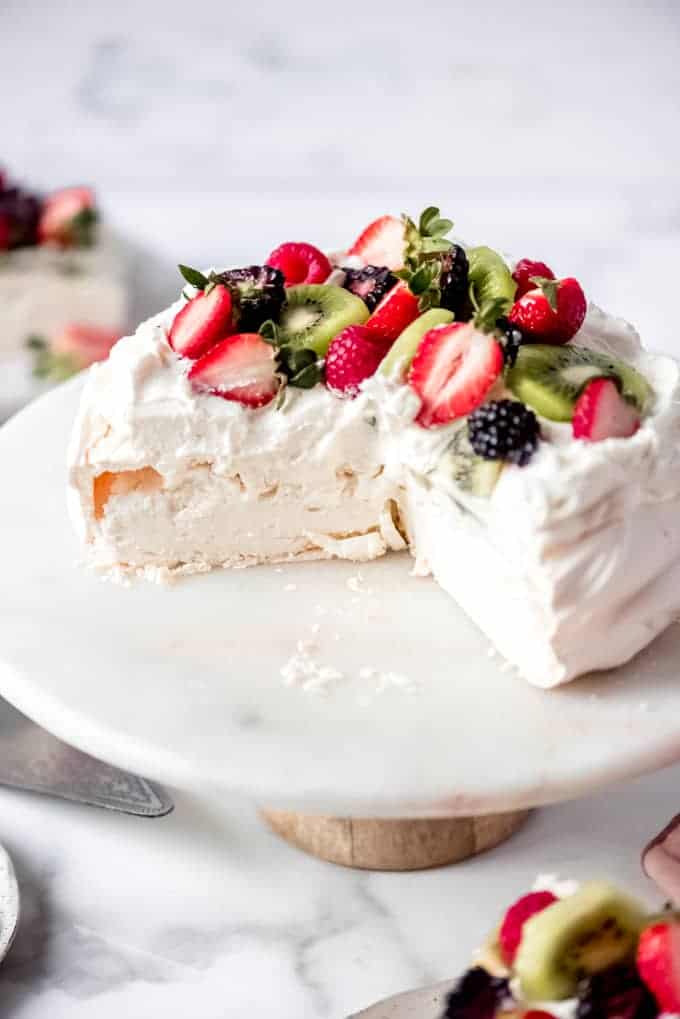
 

Pavlova for Helen's birthday 

Later when I met my husband‘s family I found out about other Christmas must-haves such as mince tarts and plum puddings. I was introduced to the ritual of steaming, hanging and “flaming the pud “. Don’t even start me on finding silver threepences. Sadly, I had a deprived childhood of this fun tradition!

After moving to Wollongong, I was exposed to the Italian tradition of eating panettone. Their version of Christmas cake is a much lighter fruit bread style associated with the ending of the 12th night of Christmas around 5 January. I rather like it as an after-Christmas breakfast tradition.

 So while the cakes were in the oven, I wrote this story.  One thing led to another and a bit of research and discovery or two on the internet later…….  Oh my goodness the cakes!


Merry Christmas and Happy New Year.

Top of Form


Monday, 19 October 2020

Elizabeth Lizzy Kerr Revington Tinman- 1854-1915 Two husbands -10 babies by different men


My Kerr family came to Scotland from Ireland sometime before 1871. It was after the Great Famine as the children Elizabeth (Lizzy) Kerr 3x great Aunt  and James Francis Kerr 2x great grandfather were born in 1854 and 1851 in County Antrim. Elizabeth was baptised on 15/2/1854 in Loughguile Diocese of Down and Connor, County of Antrim. There is no record of them in the Scottish 1861 Census. They first appear in the 1871 census living in Glasgow with mother Ann Francis, father James Kerr a van man. By then Lizzie Kerr is 17 and a mill worker while her brother James is a (horse drawn) cab driver. A number of her father’s siblings had come to Scotland in the 1850s and found work around Glasgow in iron and mining industries. I don’t think they arrived as part of the exodus from Ireland from the great famine but more because of family connections and the exodus of Plantation People(See Kerr story link) 


Kerr family in 1871 census plus Charles Revington

Glasgow in the late 1800s was one of the largest cities in the world rivaling Liverpool and Dublin. Shipbuilding on the Clyde was rapidly replacing wooden sailing vessels. Many of our relatives were also employed in the textile industry, linen mills, carpet manufacture and cotton processing. These manufactured goods were exported around the world. Around Lanarkshire coal and iron also provided jobs for Glasgow's industrial city.

Coincidentally Lizzie’s future husband Charles Revington, a 26-year-old Slater was a boarder in the Kerr household in 1871. Lizzie married him in the High Church Glasgow in April 1874 six months before their first child little Annie Irvine Revington was born.  Brother James and sister-in-law Jessie were witnesses at the wedding as she was at theirs. 

Elizabeth Kerr m Charles Revington 1874


Next, we hear is that Lizzy struggled to take care of Annie as she was estranged from Charles when they parted about 1876. The Poor Law records (1880) where her mother Anne was interviewed for assistance showed little Annie living with her grandmother while her mother Elizabeth lived in Nuneaton Street while working at the West Street mill. The record tells that Lizzie was giving two shillings from her wages for support of Annie to her mother. All support of this working single mother would have ceased with the death of her mother in 1884. Poor Anne Francis was also living with and assisting her son and children after the death of his wife in 1881.

Elizabeth and the girls 1891 census


I then found Lizzy in the 1891 census with two children besides Annie. The second child Maggie was born in 1884 and registered as Maggie Kerr or Revington.  with Lizzie claiming on the birth registration that Charles was not the father of the child and that she had not had any personal communication with him since they ceased to live together eight years before. Similarly, the new born Jeannie was three months old was registered as Kerr or Revington with a similar comment that Charles was not the father and that she had not had any personal communication with him since they parted. Sadly, she died later in the year.

Despite the economic expansion of Glasgow there was squalor and poverty. Gloomy tenements became overcrowded and cramped. They lined the streets of Glasgow. This overcrowding caused problems with sanitation and water supply. Coincidentally newly introduced registration of birth deaths and marriages in 1855 led to the capture of information about the cause of deaths. Conditions were causing spread of disease. New sanitation schemes eased the problem. During the 1890s one in seven babies died in Glasgow from common diseases of diarrhoea, measles and lung infections. Jeannie had died of infection of the lungs.

However, something made me look at the gaps between the children’s births and this investigation revealed that Elizabeth had actually given birth to 9 children by 1891- Janet, William, James, Jeannie (1) Rosina, Alice as well as Margaret, Annie and Jeannie (2) Most of the children had died within their first year with little James making it to age 5 and the first Jeannie to age 3. Again, each child was registered as Kerr or Revington with the disclaimer that Charles was not he father and that she hadn’t seen him since their separation.

Another child registered as Kerr or Revington  with declaration as to parentage

Only a year later Charles Revington died in August 1892 as a result of falling off the roof during demolition. Elizabeth must have been told of the accident while he lingered for five days dying from his fractured skull. She was the informant widow on his death certificate! A fellow Irishman from Ballintaggart Armagh lived in the same tenement at 5 Ritchie Lane. Edward Tinman Edward was a 34 year-old Carter. They married a couple of months after Revington‘s death in November 1892according to the forms of the Church of Scotland.

Marriage to Edward Tinman


Imagine Elizabeth’s joy when not long later she could finally register a baby as legitimate. Little Thomas Tinman her 10th child was born in 1894.  Whether it was financial security, improved sanitation and hygiene conditions imagine her further joy when she saw him grow to a young man.

In the 1901 census they are still living in the 5 Ritchie Lane tenement and Thomas is now seven his half big sister Annie is working as a cotton winder and Maggie as a wool weaver.

The 1911 census records that Edward and Lizzy have been married 18 years with only the one child in that marriage. They are still living at 5 Ritchie Lane with her husband still a contractor Carter.  Son Thomas is a lorry boy and oldest daughter Annie a jute winder at a carpet factory. Maggie had married William Hutchison Burbidge in 1907 and made Elizabeth a grandmother of two children by then.

Tinman family 1911 census

 Sadly, War had broken out and on the day of her last birthday 15 February 1915 she farewelled her son who had enlisted.  Elizabeth died in late 1915. They had moved to 269 Abercrombie Street Glasgow and when she died of Morbid Cardio Bronchitis Asphyxia on that cold 4th December morning Edward was her informant. He lived in the Hutchestown house until he died in 1931.

What became of those she left behind?

Maggie as I mentioned had married in 1907 with Annie as her witness. She went on to have six children in all.   Elizabeth, William Helen (Nellie), Margaret (Greta), Edward (Teddy) and Jean (Jeannie) Burbidge. She died of heart failure at the age of 53 having outlived her husband who died in 1932.

Maggie and William Burbidge - courtesy of the Burbidge family


Annie remained unmarried and childless until her death in 1931 at age 56. For most of her life she was a mill worker. She and her stepdad Edward died in the same year.


 Thomas was the product of the long marriage of Elizabeth and Edward Tinmen enlisted in 1915 and began duties with the 2nd Cameron Highlanders (Queen’s Own) the day after Elizabeth’s birthday. He was at home until June and then left for France until late November 1915 He probably saw action in the Western Theatre perhaps being too late for action in St Eloi and the 2nd Battle of Ypres. The Second battalion of the Cameron highlanders was moved to Salonika in December 1915 where they were involved in various actions against the Bulgarian Army including in 1916 the capture of Karajakois, the capture of Yenikoi and the battle of Tumbitza Farm. Later in 1917 they were engaged in the capture of Homondos and in 1918 the capture of the Roche Noir Salient, the passage of the Vardar river and the pursuit to the Strumica Valley. At the end of November 1918, they ended the war at Izlis, Macedonia.

Sadly, Thomas would never see his mother again as she died in December 1915. He was returned to Scotland on a disability pension and discharged on 11 March 1919. Nearly 10 years later he married Agnes Mullen in 1928 and had four children Edward James, Donald Ernest, Agnes Mullen and Joyce Innes. He died in 1974 in Glasgow outliving Agnes who died in 1961.

Since beginning my family history journey I always felt for Elizabeth (Lizzy) Kerr my three times great aunt. I’ve written about her brother James Francis Kerr the Irish Scott who made me laugh with all the things I discovered about him, his two wives, his businesses and bankruptcies, the horseracing and training, his many children and their escapades.  The discovery of Elizabeth’s 10 children has highlighted another side of life in Glasgow. Lack of support for unmarried women and deserted wives made life tough. It seems to me that something was missing in Lizzy’s life until she married Edward Tinman. Certainly, she had sought out male companionship or was she more than a mill worker to make ends meet? To lose baby after baby (more than the average 1 in 10 deaths of the times) indicates hard times for mothers who lacked contraception, basic sanitation, financial support and access to medicines we take for granted 140 years later.  Thank goodness for Edward and his steady job. It looks like he scooped up Lizzy at her lowest point and provided health and happiness for many years to come.

In the past and more recently I been in contact with the extended family of Maggie Revington. They have been welcoming and helpful and interested in continuing their family history. They have passed on stories and photos. What more could you expect from a family descending from the Kerrs?

Maggie Burbidge with her two oldest Scott boy Grandchildren


Wednesday, 30 December 2015

It felt like I'd met a long lost relative...

A funny thing happened at a Cancer Council Morning Tea. A fellow parishioner, Colleen, and I got talking about family history. As I explained my Kerr tree to her she said "I used to know some Kerrs". Instead of pursing her old Kerr neighbours she recalled knowing a man Jimmy who was a colleague her father's at the railways and who lived at Neutral Bay.  As a child they used to go there for Hogmanay (Scottish New Year). I finished her sentence. "His wife's name was Lavinia and his kids were Alf and Billie".

It turns out her sisters and parents spent a lot of time holidaying and socialising with my grandparents. My Nanny generously gave them a money gift for New Year. My Uncle Bill remembered the rowdy Hogmanay New Years parties he longed to be away from and the holidays to the Woy Woy on the Central Coast as the railways families took advantage of their holiday railway passes.
June and Colleen c 1948
 Sadly I had known her mother Peggy too but never knew of this link with my grandparents history.
Colleen and I agreed to get together to share memories and and help me identify some  photos if possible.
My Nanny Lavinia with Margaret (Peggy) Campbell and little Colleen

She had photos of my Grandfather James and we identified photos of the holidaying Campbell Family including little Colleen.

I felt I had grasped a little more of my family story and that she was like a a long lost relative.

Hugh Campbell with Colleen and June  and James "Jimmy"Kerr right
A bit of a mystery woman, I had been channelling my Nanny who died when I was 4 for weeks. -revisiting her Church, Convent workplace and her home.  Well done Nanny- could you please send me some hints about your mother? 

Sunday, 15 March 2015

Andrew Yuill Kerr 1892-1959 Military Medal (Kerr Boys cont)

Born in 1892, Andrew was unmarried and living with his parents James Francis Kerr and Agnes Kerr in the 1911 census. He worked as a chauffeur for his cab proprietor father. A little over 3 years later he enlisted at Grove Park in the Army Services Corps (ASC) on 8 December 1914 aged 22. 

Thus continues the story of the Kerr men going to war. Andrew was the second youngest of the five sons James Francis lent to the war effort. 

"He would return a hero."

Like his brothers, he was singled out for service in the British Expeditionary Force for his ability as a motor car driver. In under a month he had embarked on the SS  Munston at Avonmouth on New Year's Eve 1914, arriving at Le Havre, North Western France on 4 January 1915. In France he was initially posted to the 1st District Field Ambulance operating in the Frontline.

From 24/8/15 he was appointed to the 141st Field Ambulance and was responsible for casualties. The Field Ambulance were mobile units responsible for movement of casualties and operated to provide treatment for wounds or sickness from no man’s land to dressing stations and later hospitals.  Basically there were stretcher bearers relaying casualties for miles to a station where the injured soldier could have wounds tended to. For example there were Bearer Relay posts, Regimental Aid Posts, Advanced Dressing Stations and Main Dressing Stations. 

Andrew’s service number M2/ 021524 denotes he was a driver of a Motor Ambulance evacuating wounded.  The official April War diary of the 141 Field Ambulance now kept at the National archives, London England (reference WO95/1259) gives information about Andrew's activities at the hospital at Gwalia farm in April 1918 around the time of great casualties. I have a full digital copy of this Diary if you care to contact me. Basically the Field ambulance moved with the Army according to its position in the Front. The Field Ambulance either commandeered farms and farmhouse buildings or set up in marquees along the French countryside as needed.
"gallantry and devotion to duty in action." 

On 6 April 1918 Andrew and some others rejoined the unit from a temporary duty with Number One Field Ambulance. His location was Gwalia Farm which was a Main Dressing Station. His unit moved to Chocques. On 9 April however there was a spike of 251 wounded and another 26 the next day. Wounded dropped until 18 April when it is recorded there were 23 sick and a staggering 493 wounded.  Large numbers of wounded ranging between 21 and 155 each day continued to pass through the unit until the end of the month. It was during this time on 22 April 1918 that the Corps Commander awarded the Military Medal to Private J.L. Wilson and Private A.Y.  Kerr for “gallantry and devotion to duty in action. “  His record also mentions  the award of Good conduct medals.
Below is the acknowledgement  for the Military Medal forwarded to Andrew after his return  to Scotland in June 1920. The medal was granted for Bravery in the Field.

Acknowledgement of receipt of the medal
When the war finished it looks as though he was caught up in the slow process of demobilization.  At demobilization he was  in Bonn, Germany. His papers show that he was demobilised on 25 May 1919 and we can see from this form that because Andrew is moving to a Class ‘Z’ Reserve status, he would be obliged to return to the Army if called. This fitness status seems to confirm that he was not injured during the war. 

Part of the demobilization paperwork
Returning to Denistoun in Glasgow, his war records signed by the Lt Col of the 141st of Field Ambulance described him as "exceedingly good motor driver". Upon his return he resumed work as a chauffeur and married Mary Brian Johnstone on the 24th November 1920. Mary was the sister of Hannah Johnstone who had married Andrew's older brother David in 1904. Two brothers married two sisters.

Andrew and Mary adopted a child, Anthony Kerr in 1927 and he in turn gave them a granddaughter Catherine Kerr. Andrew continued to drive taxis and died aged 67 in 1959 of Sigmoid colon cancer. Mary outlived him.


Andrew's Military Medal
The Military Medal was given to David’s daughter and Mary's namesake, Mary Bryan Kerr. Mary or May as she was known in turn passed it to her grandson, Kelly Jorgensen who was a Lieutenant  in the New Zealand Army. “He regularly wears the medal to commemorative services”. The inscription around the medal is M2-021524 PTE A.Y.Kerr- MTASC.

I’m really proud to have written these two blogs about the Kerr sons and their part in the World War I. Coming from poor Scottish backgrounds these hard working brothers put their hands up, used their skills with horses and vehicles and took off in the early days of the war and saw it through until the end or until they were too ill or injured to continue.

When I started my family history research I was a little disappointed not to have an ANZAC amongst the relatives.  My husband’s grandfather had been in Gallipoli after the famous ANZAC tragedy fighting with the British. As we enter the 100 year anniversary period we see that it was the Western Front and other parts which  were also crucial to the War effort. Many relatives from the British Isles and indeed Australia paid with their lives and others their health. Luckily some returned, lead good lives and even signed up again for WW2 or encouraged their children to do so.

Keep reading the blog dear friends.  I’ve still got more War stories of relatives and a few friends have been “conscripted” to write their own family hero story as guest bloggers.

If you want any documents relating to these people please contact me on Robyn's email as the comments section doesn’t seem to work unless you are on google+  You can share the blog with friends and relatives or keep up  with new stories by “following” the blog. 

Cheers Robyn

Monday, 16 February 2015

The Kerr boys go to War.... James Cross Kerr, Francis Robertson Kerr, John Kerr, Thomas Neilson Kerr Andrew Yuill Kerr


James Francis Kerr had six living sons at the start of the war. As a local cab proprietor operating a horse drawn and mechanical taxi service the business employed  men well versed with horses and or mechanical forms of transport. When World War I loomed, James found he had men with the skills needed by the war effort. One by one 5 of his sons enlisted and more than likely other staff went as  well.
Army Services Corp badge

1915 recruiting poster

The wartime enlistees had a choice over the regiment they joined.  At least three sons chose to join the part of the Army so vital to enabling the war effort - the ASC. The Army Service Corps or as it later became known in 1918 the Royal Army Service Corps. 

The Long, Long Trail website describes the situation faced by the army...
“Soldiers can not fight without food, equipment and ammunition. In the Great War, the vast majority of this tonnage, supplying a vast army on many fronts, was supplied from Britain. Using horsed and motor vehicles, railways and waterways, the ASC performed prodigious feats of logistics and were one of the great strengths of organisation by which the war was won.”
“At peak, the ASC numbered an incredible 10,547 officers and 315,334 men. In addition were tens of thousands of Indian, Egyptian, Chinese and other native labourers, carriers and stores men, under orders of the ASC.”
The ASC was organised into Companies, each fulfilling a specific role. Some were under orders of or attached to the Divisions of the army; the rest were under direct orders of the higher formations of Corps, Army or the GHQ of the army in each theatre of war.

  • Base Depots
  • Horse Transport Companies
  • Mechanical Traqnsport Companies
  • The Army Remounts Service (Companies involved in the provision of horses)
  • The ASC Labour Companies

Men of the Army Service Corps are most difficult to research due to the structure of the organisation and the location of assistance etc. Records contain minimal information and I suspect the records of all these Kerr men (possibly stored together) are in the “burnt collection”  a victim of the London Blitz in WW2.   Medal records are slowly surfacing which contain the vital information that some were indeed in the ASC. This is coupled by the fact that there is no memorial to the Army Service Corps. 

These are the stories of 4 of James’ sons who joined Great Britain’s war effort.
James Cross Kerr 1876-1937
Francis Robertson Kerr 1886 -1954
John Kerr 1889-
Thomas Neilson Kerr 1895-1954
Andrew Yuill Kerr’s story will be in a later blog and David Montgomery Kerr’s contribution is listed at the end of this blog.

James Cross Kerr was my great grandfather. James had a different mother to the other boys being the first born and son of James Kerr and Jessie Cross who died when the children were young. He is 5’7 ½” with dark brown hair, olive skinned and grey eyes.  Presuming he enlisted in 1915 he would have been around 39 years old upon enlistment. At this stage he was married to Mary Ann and had three boys James, Francis and Alfred. He had been part of his father’s business since he was 11 years old.

No enlistment  records have been found but I have this great photo of him in his uniform, one document that seems to give a few more snippets of information plus a couple of notes written by my father.

The receipt for Attestation below seems to show that James transferred from the 8th Argyll and Sutherland Highlanders service number 202.595


to the Army Service Corps Park Royal Horse Transport Section and received a new number T/391942. His transfer came about in February 1918. 

James transferred to the Park Royal Horse Transport in 1918
My Dad  lived with his Grandfather in Sydney until he was 5 and his memory of his grandfather’s war service was that he “served in WW1 but may have put age back. Worked with horses, served in Argyll and Southern (sic) Highlanders.” ” saw service in Turkey and France- was discharged unfit perhaps malaria.” “Malaria in WWI -pension for a while Dr said it played a part in his death.”

The service in Turkey might be incorrect if indeed he was in the 8th. He could indeed have tried to reduce his age so that he wouldn’t be turned down as a volunteer.

Dad’s preliminary research drew a blank on service records and he concluded that the records must have been in the “burnt collection” where records were destroyed during the Blitz in WW2.  Few details can be accurately confirmed.

An inquiry about the uniform shown in the photo below which was made at the Australian War Memorial replied that” the bandolier and spurs suggest service in a mounted unit and the shape of the cap badge suggest the Army Services Corps.”


James Cross Kerr and wife Mary Ann. The uniform seems to indicate the Army Services Corps
So the attestation paper above seems to be relating to our James Kerr as he was being transferred to Army Services Corp Park Royal  Horse Transport in England. In a medal record he is referred to as a driver. Perhaps the malaria caused him to return from the Front in February 1918 and be put to effective use working with the horses.

James returned from the war and to his three growing boys. After the war they prepared to immigrate to Australia. Mary Ann his wife returned to Scotland with her son Francis but James Cross, James and Alfred remained living and working in North Sydney.  James Snr and his son developed a delivery business which involved a horse and cart delivering fruit and vegetables. Never far from his beloved horse past.

Francis Robertson Kerr was to become  a  5’5” 27 year old motor lorry driver when he enlisted at Grove Park in January 1915. He was in the Motor Transport part of the vital  Army Services Corp. Probably due to his age he was appointed as a L/Corporal three days later. He reverted to Private of his own request in May 1915 which was the time he heading for France as part of Britain’s Expeditionary Force.

Frank's papers might be victims of the "burnt collection"
Some details of his 1917 service remain. From January 1917 he was in hospital for three months. From late April he was engaged as No 1 Lorry Driver on an Ammunition Column and transferred to troop supply. By July 1917 he was back in hospital until October 1917. On 18/11/1917 he was returned to England and hospitalised. 

His total service was 3 years and 15 days when he was discharged after being in Birmingham War Hospital.-no longer physically able for war service  27/11/1918. His Commanding Officer described him as sober, very reliable and intelligent and suitable to car driving in his discharge papers. Frank returned to Glasgow held the no 2 taxi licence and remained driving until his death. Somehow he acquired the nickname ”Raving” I’d like to know more about that!

John Kerr Service number 12602 was a 25 year old carriage driver when he enlisted. Married  in 1906 to Annie Mc  Phee, he had three children Peter, Margaret, and John and another on the way when he signed up  on 19/8/14 with the Highland Light Infantry. He joined the 3rd Battalion at Hamilton and after  remaining in a home depot (probably in England) until October 1915  moved with the British Expeditionary Force to France. 

His papers describe him as 5’3 ½ “ fresh faced man with brown eyes and black hair.  He was considered fit for the army on enlistment but a 16 year old injury where he fractured his left thigh ended his time in France. Since joining, a slight limp coupled with army conditions meant his thigh pain became much worse. The Medical Board of the army service deemed that to have aggravated the old injury.  He was discharged due to lameness on 13/4/1916 after service of 1 year 255 days.  The Army paid him a pension but felt that the condition would improve. Sadly during his time away his son Francis was born and died.


John's medical discharge papers
Thomas Neilson Kerr
No records can be found for Tommy as he was known. The only hint of information is Dad’s reference to him serving in the Dardanelles, Turkey. There are many Thomas Kerrs  from Scotland, a couple of whom had M/ service numbers indicating service in the Army Services Corp.
Really we have no conclusive evidence that he followed any of the paths of his brothers. Thomas returned from the war and several years later immigrated to Sydney with his mother Agnes Kerr and war widowed sister Agnes Park. He returned to Glasgow with his mother, married and worked as a labourer. He and Isabella remained childless. 
  
Andrew’s story of his time in the ASC will be related in the next blog.

David Kerr, the second son, did not go to war.  As a 30 year old with 4 children he still did his bit. His daughter, Mary Brian recalls her memories of Glasgow during the war.
“August 4, 1914 the beginning of the Great War I saw sailors going on ships, Greenoak and Gourock were where they set off from. The war lasted four years and it was a very different time. There were food shortages and blackouts and in Glasgow.  There were lots of refugees from countries overtaken by the Germans. My brothers and I had to go and wait in the various queues for meat, margarine etc, before we went to school. Mother would come later and take the place so that we could go to school.
My father had the first Fiat car which came to Glasgow and he used to go to various convalescent hospital to take soldiers for a trip. There were so many New Zealand and Australian lads and they usually came to our house for tea.” 

The patriarch, James Francis Kerr died during the war in May 1917. He had gone through some tough times with financial trouble and bankruptcy proceedings in 1913. The advent of the motorised travel in the early 1900s had decreased the business for horse-drawn carriages and perhaps diminished the need for his beloved horses... By all accounts he retired to become a racehorse breeder/trainer. 

With the outbreak of war his sons -his workers- had signed up to serve from mid 1914.They took with them the skills they had learnt in the family business. Some were drivers and others worked with horses which were still a very much-needed commodity in the Western Front. He would have been one very proud man even though he didn't live to see the end of the war and their safe return. Perhaps he evened training horses for the War effort before his death.